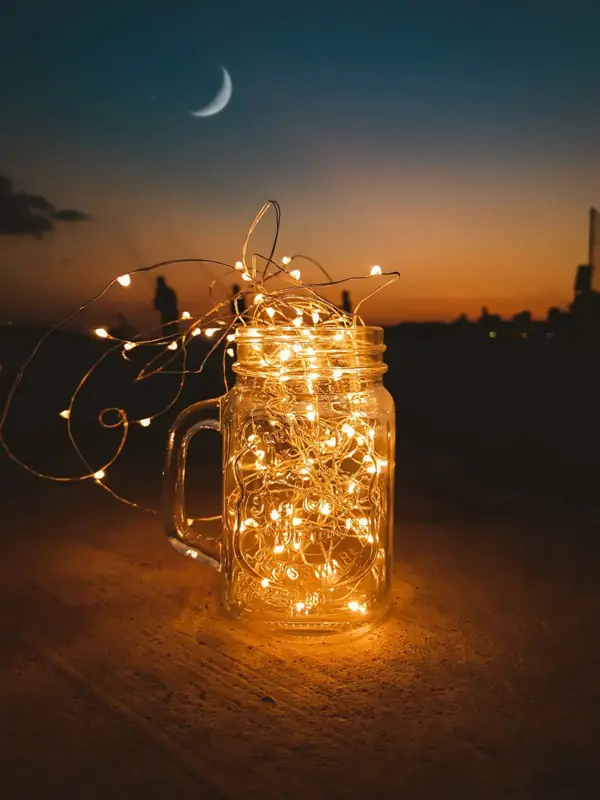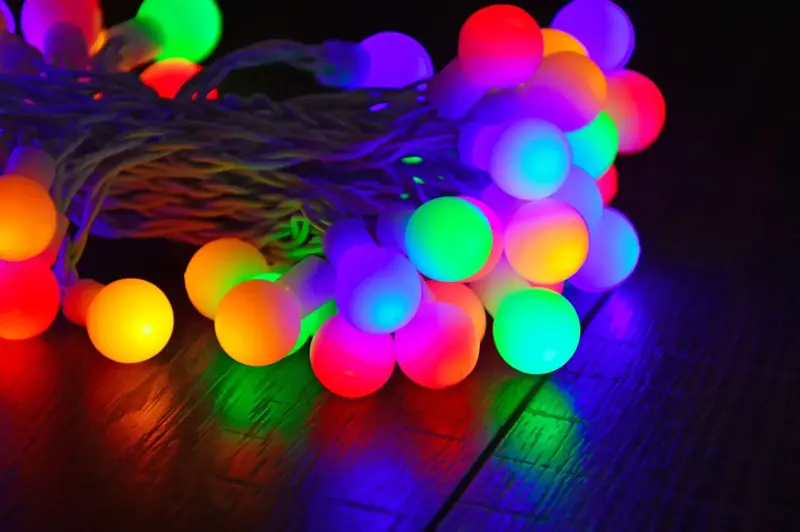
Waterproof fairy lights let you put tiny LEDs where ordinary strands would fail in a week: across a patio in the rain, through a flower bed under the sprinkler, around a fountain, or coiled in a vase of water as a centerpiece. The trick is knowing what "waterproof" really means on the label, because it covers everything from light splashes to full submersion.
This guide decodes IP ratings, explains copper wire vs PVC, compares battery and plug-in strands, and covers placement, setup and care so your lights survive more than one season.
What makes waterproof fairy lights waterproof
Three parts have to keep water out: the LEDs themselves (sealed in resin or a silicone bead), the wire coating, and whatever powers the strand, whether that is a battery box or a plug adapter. A strand is only as waterproof as its weakest part, and on most failed strands that weak part is the battery box or the connection between strands.
IP ratings in plain English
IP stands for ingress protection. The first digit is dust, the second is water. For lights, the second digit is the one to read.
| Rating | What it handles | Good for |
|---|---|---|
| IP20 | No water protection | Indoors only |
| IP44 | Splashes from any direction | Covered porches, balconies under a roof |
| IP65 | Low-pressure water jets and rain | Open patios, fences, gardens |
| IP67 | Temporary submersion | Planters, ground level in heavy rain |
| IP68 | Continuous submersion, as stated by the maker | Vases, fountains, underwater fairy lights |
Look for the rating on the whole product, not only the LED strand. A sealed strand with an IP44 battery box is effectively IP44.
Types of waterproof outdoor fairy lights
Copper wire fairy lights
Copper wire fairy lights use thin, lacquer-coated copper with sealed LED beads. They bend into any shape and vanish against foliage and bark. The coating is thin, so avoid scraping it against rough brick.
PVC and rubber-coated strands
Thicker wire, tougher on gutters, railings and pergolas. These are the usual choice for permanent patio runs and waterproof garden fairy lights along fences.
Waterproof battery operated string lights
Battery boxes with a rubber gasket and screw-down lid. Perfect for lanterns, planters and tables where no outlet reaches. Our outdoor fairy lights guide covers battery life and timers in more depth.
Underwater fairy lights
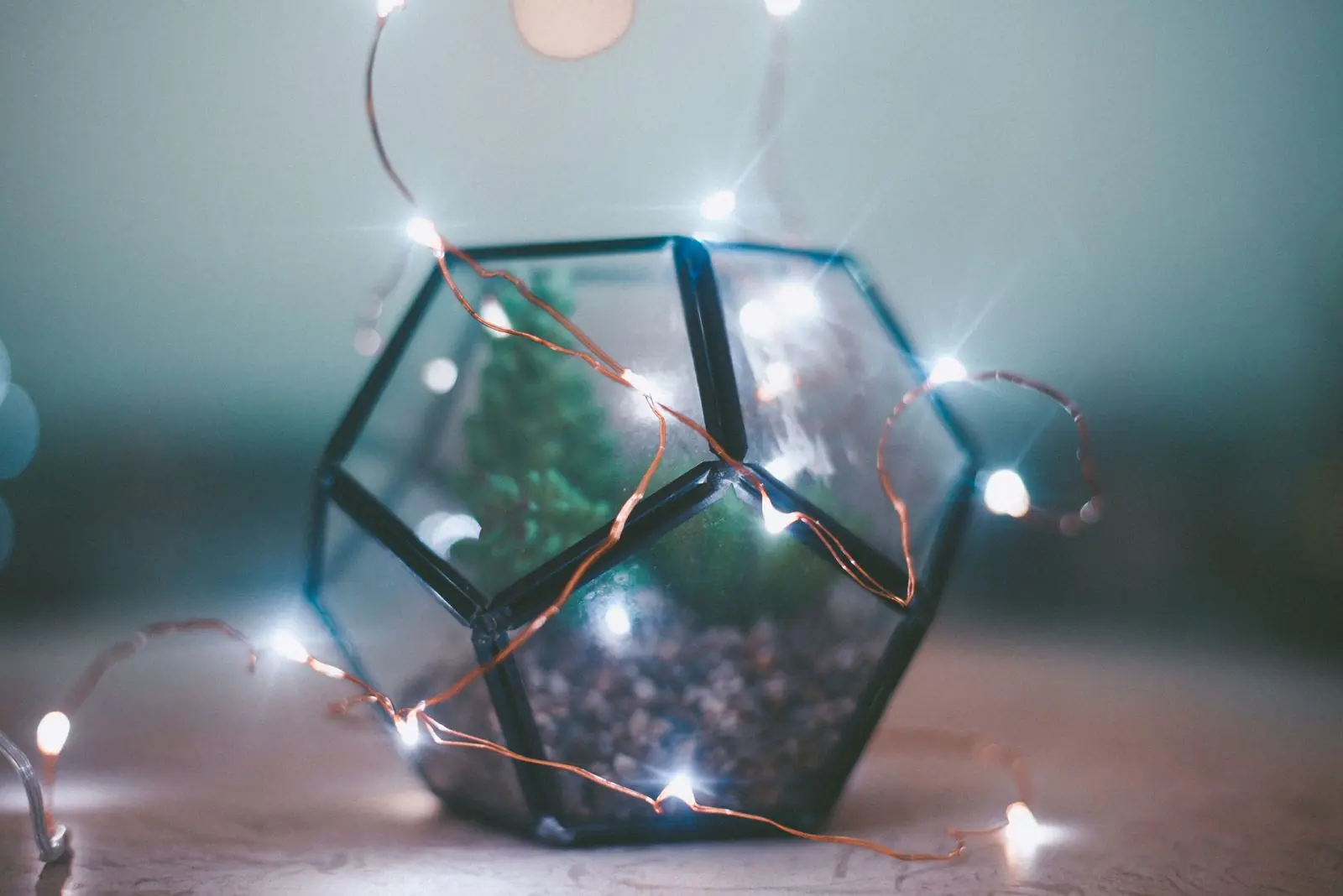
Submersible strands, often with a waterproof coin-cell or AA pod, designed for vases, bowls and fountains. Only the strand and pod rated for submersion should go under water.
What to look for
The specs table above sums up the recommendations. Beyond the rating, a few details tell you whether a strand was really designed for weather:
- A battery box with a visible rubber gasket and screws, not just a snap-on lid.
- LED beads fully encased in resin or silicone, with no exposed solder points.
- A cable exit with a molded strain relief, so the wire can't pull loose and open a gap.
- For connectable strands, screw-together sealed joints rather than bare push-fit plugs.
- An adapter or transformer that is itself marked for outdoor use.
- Wire that stays flexible in the cold; stiff, shiny coatings tend to crack.
Color matters outdoors too. Warm white looks natural against plants and wood, while cool white sparkles nicely on water and in winter scenes. If you're unsure whether you want fine fairy lights or chunkier bulbs, our comparison of fairy lights vs string lights lays out the differences.
Where to use them
- Patios and decks: zigzag strands between posts or along the railing for a low canopy.
- Garden beds: weave waterproof garden fairy lights through shrubs and perennials, box hidden under a leaf.
- Water features: a submersible strand at the base of a fountain or birdbath.
- Centerpieces: underwater fairy lights in a glass vase with flowers or floating candles.
- Wedding and party tents: where dew and drinks make indoor strands risky.
- Window boxes and balconies: a strand tucked between plants catches every bit of rain, so this is where IP65 pays off.

Laying out lights over a seating area? The planner below estimates how many strands and anchor points you need for your patio size and hanging pattern.
Patio string light planner
Enter your space, choose a hanging pattern and get the strand count, bulbs and anchor points, with a plan drawing.
Includes about 10% for a gentle drape and 6 ft to reach the outlet. Check the maximum number of strands your lights can link end to end.
For the hanging hardware itself, see how to hang outdoor string lights.
Setup that keeps water out
Check the seals
Make sure the battery box gasket sits evenly and the screws are snug, not overtightened.
Point openings down
Mount battery boxes and plug joints with cable exits facing the ground so water drips off instead of running in.
Make a drip loop
Let the cable dip below the box or plug before it rises again, so water runs off at the low point.
Lift connections
Keep plug joints off the ground and away from sprinklers and puddles.
Test after the first rain
Open the box the morning after the first downpour. Dry inside means you're good for the season.
Care and safety
Even sealed strands appreciate a break. Bring them in for the harshest winter months, dry them fully before storing, and remove batteries. Check coatings each spring for cracks, especially on copper strands that have been bent repeatedly. If one LED bead looks cloudy or a section flickers, water has probably found a way in there; a dab of clear outdoor silicone can sometimes save the strand, but a strand that keeps flickering should be retired.
Underwater strands need a rinse and a dry after each use, since minerals and plant matter in vase water leave a film on the pod seal over time.
Next steps
For a festive outdoor setup, pair waterproof strands with a battery operated garland on the door. And the light tools page has the patio planner plus a battery-life calculator.