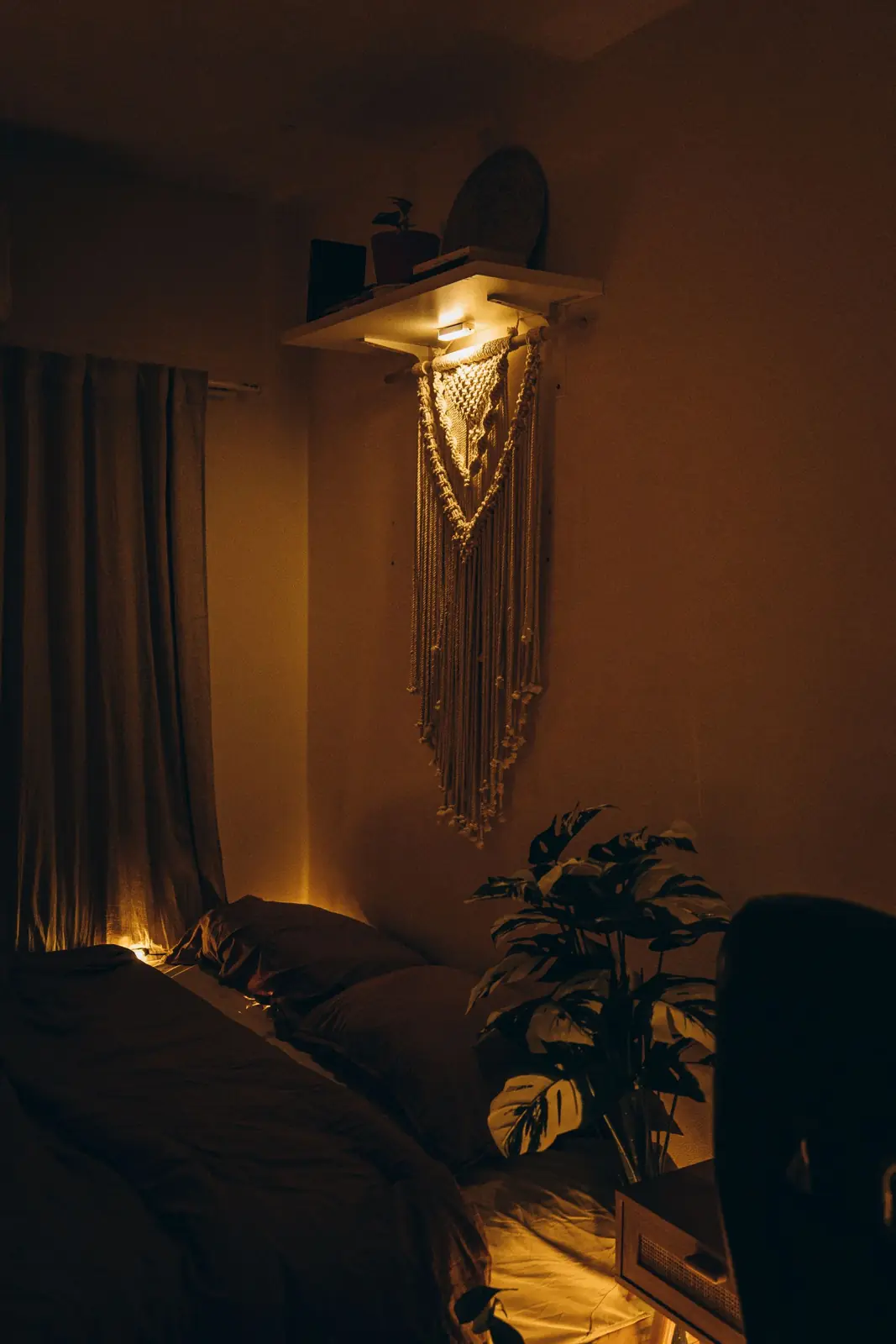
Indoor fairy lights are the simplest way to make a room feel softer at night. One strand over a headboard, a few loops around a mirror, or a canopy across the ceiling, and the overhead light suddenly feels unnecessary. They use very little power, stay cool to the touch, and are endlessly flexible.
This guide covers the different kinds of indoor strands, plug-in vs USB vs battery power, how to choose the right color of white, room-by-room ideas with a focus on fairy lights for the bedroom, and how to hang them neatly and safely.
Types of indoor fairy lights
Micro LED wire lights
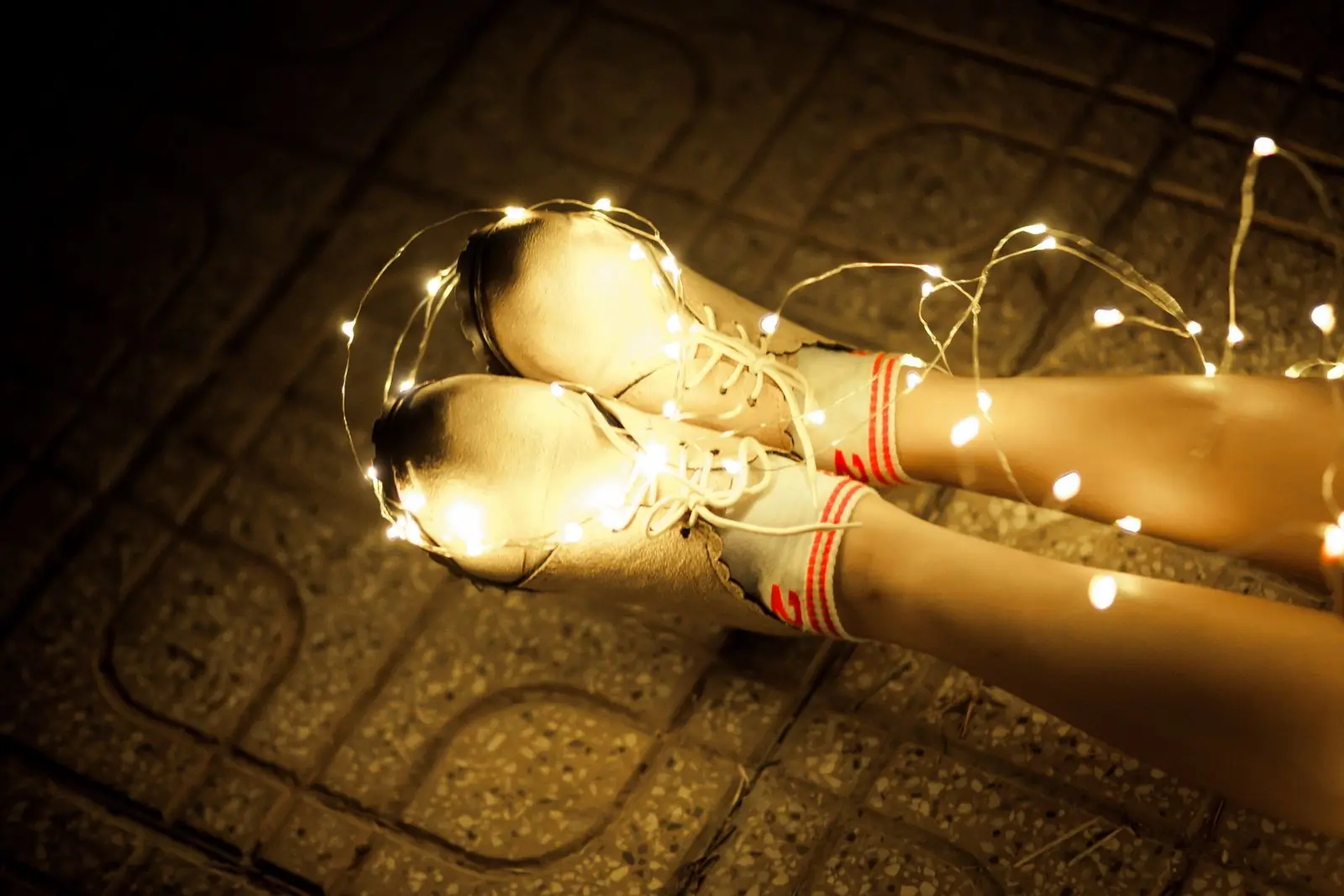
Tiny LEDs on thin copper or silver wire. Delicate and nearly invisible when lit. Perfect for jars, mirrors, photo walls and crafts. The silver wire fairy lights guide goes deep on these.
Mini lights
Mini lights are the slightly larger, classic bulb-shaped LEDs on a green or clear cable, the kind often wound around trees. They give a fuller, brighter glow and suit windows, bookcases and holiday decor.
Curtain lights
Many vertical drops from one top strand. Hang them behind sheer curtains or on a blank wall for a glowing backdrop.
Shaped strands
Stars, globes, flowers and cotton balls. Fun accents for kids' rooms and shelves.
What to look for in indoor fairy lights
The specs table above sums up the recommendations. A few features make a big difference once the lights are up:
- A remote with dimming, so you can turn the glow down at bedtime.
- A steady mode. Twinkle and flash are fun for parties but tiring to live with every evening.
- A built-in timer, ideally 6 hours on and 18 off, for lights that come on by themselves.
- A long unlit lead, so the plug or battery box can sit behind furniture.
- Wire color that matches the background: clear or silver for white walls, copper for wood, green for plants.
Length matters too. Measure the run, then add a little for swags and the trip back to the outlet.
Plug-in vs USB vs battery fairy lights
| Power | Best for | Watch out for |
|---|---|---|
| Plug-in | Long strands, canopies, windows lit every night | Needs an outlet nearby; plan the cord route |
| USB | Headboards, desks, walls; runs from a charger or power bank | Use a decent adapter; long runs may look dimmer |
| Battery | Jars, tables, wreaths, anywhere without power | Cells need replacing; use a timer |
For lights you'll switch on every evening in the same spot, plug-in or USB is easier and costs less to run. For anything portable or decorative, battery strands win. Our battery operated fairy lights guide covers battery life and timers in detail.
Picking the right white (or color)
Most people choose warm white for indoor fairy lights, and for good reason: a warm 2,200–3,000 K glow looks like candlelight and is gentle in the evening. Cool white (5,000 K and up) looks crisp and modern and suits white rooms and winter themes, but can feel stark at bedtime. Multicolor is great for playrooms and parties.
To see which tones fit each room and mood, use the picker below. Pick a room and an activity and it suggests a color temperature range and accent colors.
Color temperature and mood picker
Slide through warm to cool white, or pick a mood, and preview how the room will feel.
For more on how light color affects sleep and focus, see what LED light colors mean.
Fairy lights for the bedroom and beyond
- Headboard: run a strand along the top edge or weave it through slats. A USB strand with a dimmer is ideal.
- Above the bed: drape a strand in loose swags across the wall, or hang a sheer canopy with lights behind it.
- Window: frame the window or hang curtain lights behind sheers so the glow diffuses.
- Mirror: wrap the frame for a soft vanity glow.
- Shelves and bookcases: trail mini lights along shelf edges or between books.
- Photo wall: zigzag strands across a wall and clip photos to them.
- Living room: a strand in a large glass vase or along the top of a curtain rod for movie nights.
Looking for more inspiration? Our post on DIY fairy lights to decorate your home covers headboards, mirrors and more, and fairy lights for your bedroom, events and parties has party setups.
Hanging indoor fairy lights neatly
Find the power first
Decide where the plug, USB port or battery box goes, then plan the route from there.
Use removable fixings
Small clear adhesive hooks, light clips or washi tape protect paint. Avoid nails and staples through the wire.
Hang in loose swags
Relaxed curves look better than tight straight lines, and they're kinder to the wire.
Hide the cord
Run plug-in cords behind furniture or along baseboards with cable clips.
Set a timer
A remote with a 6-hour timer means the room glows every evening and switches off by itself.
Care and safety
Dust strands now and then with a dry cloth. When you take them down, wind them loosely around a piece of cardboard so they don't tangle. If one section stops working, check the plug, the USB adapter or the batteries before assuming the strand is done.
LED strands run cool, but battery boxes and adapters should still stay where they can breathe.
Where to go next
If you'd like color and voice control in the same room, read the smart LED strip lights guide. And to style vines with your lights, the fake ivy leaves guide is a great next stop.