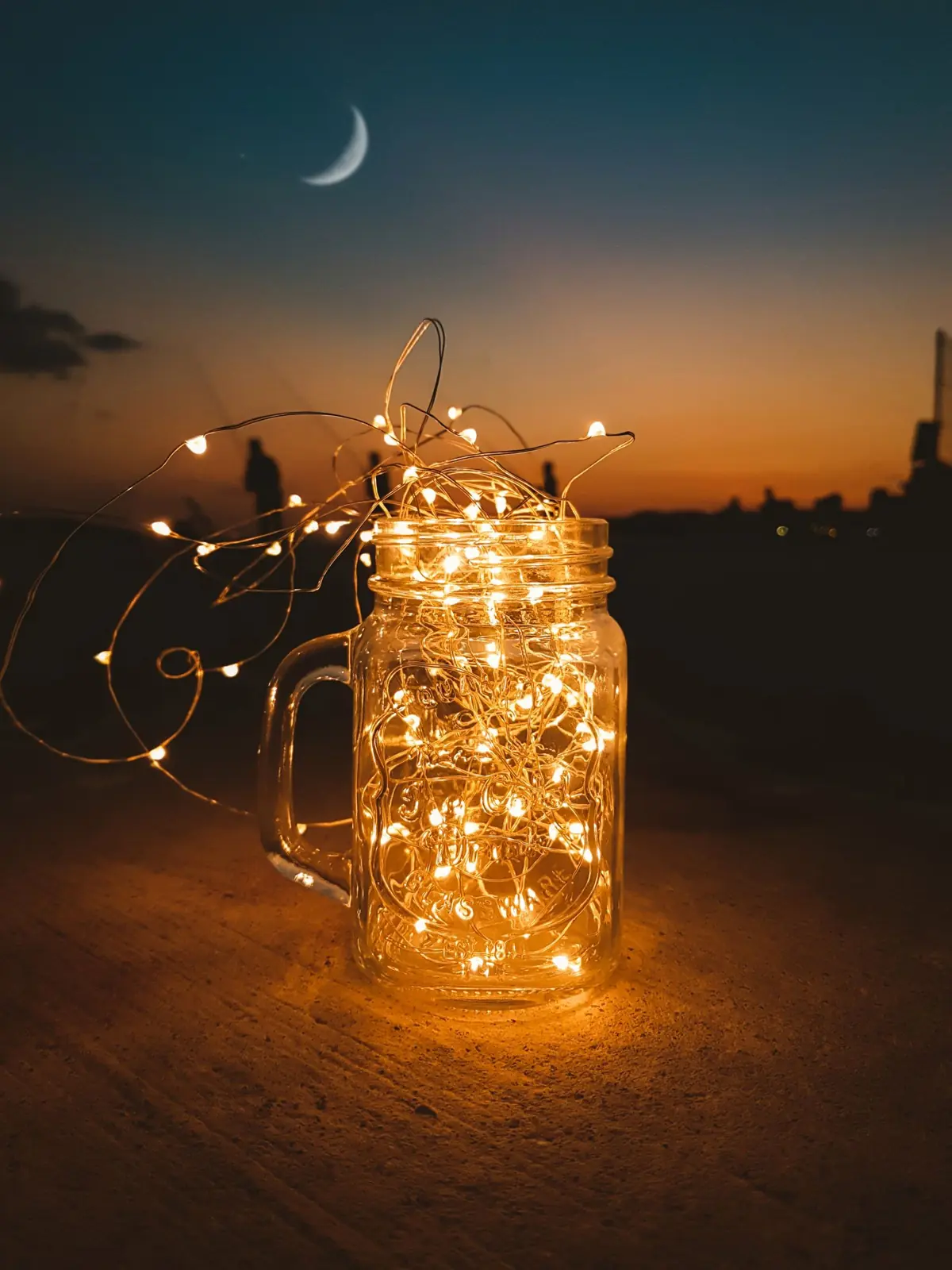
Battery operated fairy lights are the strands most of us reach for first. No outlet, no cord across the floor, just a slim battery box and a string of tiny LEDs you can push into a jar, drape over a mirror or wind through a centerpiece. They are the small, everyday workhorse of DIY lighting.
This guide covers the styles you'll come across, from micro fairy lights to starry string lights and star shapes, what makes a good strand, how long the batteries last, and the best ways to use them at home and at weddings.
What battery operated fairy lights are
A typical strand is a run of very small LEDs soldered onto thin copper or silver wire, sealed with a dot of clear resin, and powered by a small box holding two or three AA cells or, on tiny strands, a coin cell. The wire is soft enough to bend by hand and holds whatever shape you give it.
Because LEDs draw so little power, a pair of AA cells can run a short strand for dozens of hours. That makes them perfect for places a plug can't reach: the middle of a table, the inside of a jar, a bookshelf, a wreath or a costume.
Styles to know
Micro fairy lights
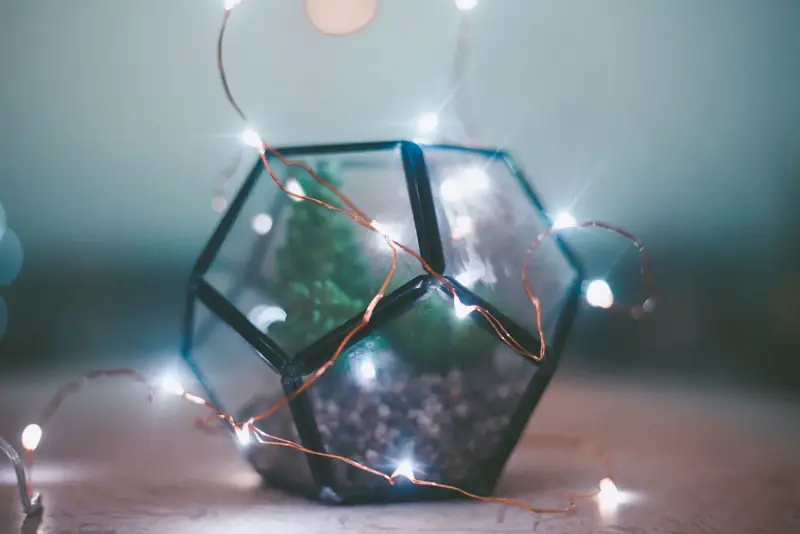
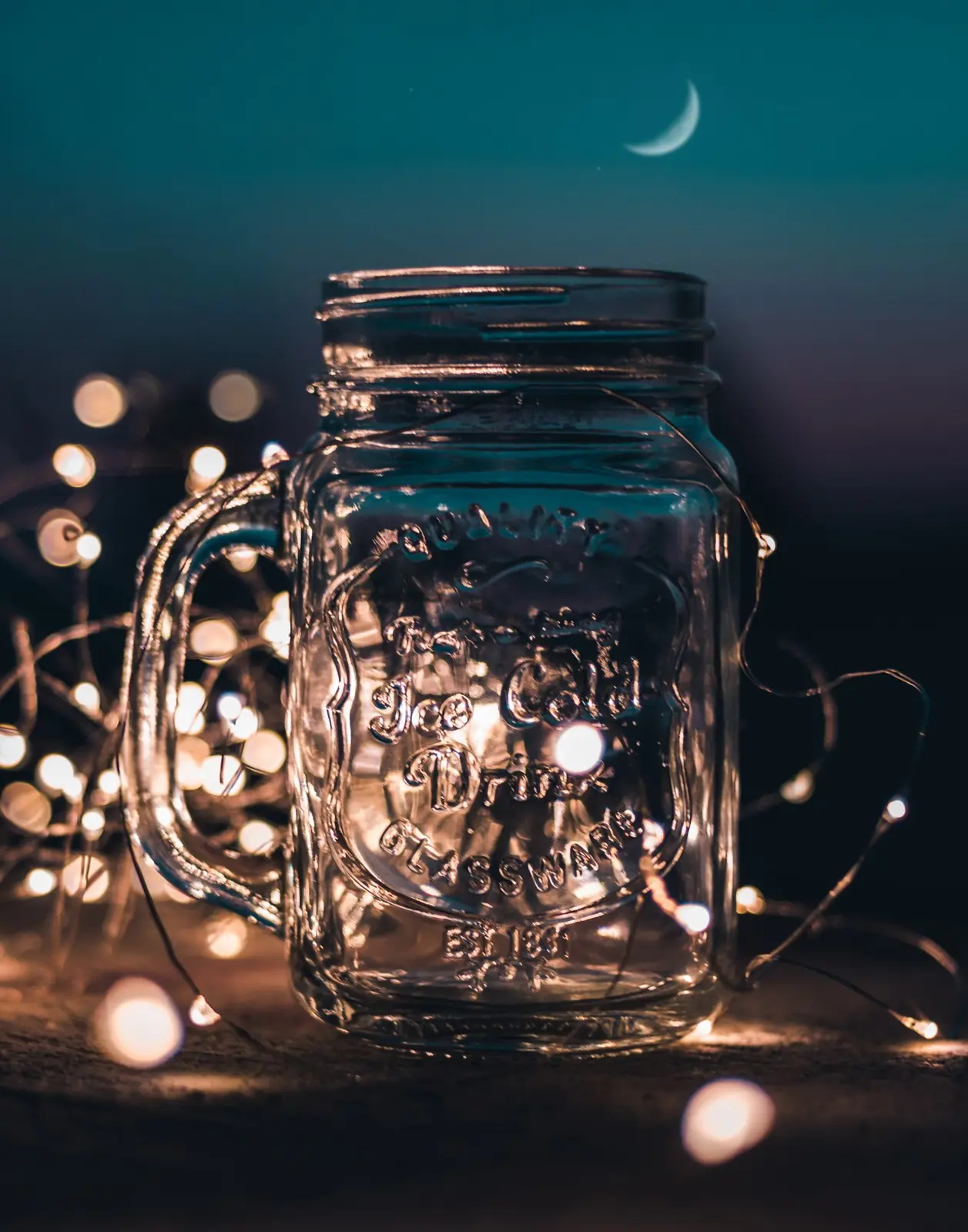
Micro fairy lights, sometimes listed as an LED micro light string, have rice-sized LEDs and nearly invisible wire. In a jar or vase they look like floating sparks. These are the mini string lights battery operated crafts are built on.
Starry string lights
Starry string lights use the same micro wire with LEDs spaced closely, often 5 cm or less, so a bundle reads as a cloud of points. Great for bottles, lanterns and photo backdrops.
Star fairy lights battery operated
Star strands put a small star-shaped shade over each LED. They're lovely in kids' rooms and on holiday shelves, but they're bulkier, so they suit draping more than stuffing into narrow jars.
Curtain and drop strands
Several short strands hang from a top wire. Battery versions are handy behind a sheer curtain or over a dessert table where you can't run a cord.
How to choose a good strand
The table above lists what to look for. In practice, three things separate a strand you'll love from one that ends up in a drawer:
- A timer. A 6-hour daily timer means you switch on once and the strand handles itself, and it roughly doubles how many evenings you get from a set of cells compared with forgetting to switch off.
- A sensible battery box. AA boxes last far longer than coin cells. Look for a firm switch and, if kids are around, a lid that closes with a small screw.
- Enough lead wire. An unlit section between the box and the first LED lets you hide the box under a jar lid, behind a frame or in a vase base.
Color comes next. Warm white looks like candlelight and suits almost any room; cool white looks crisp and wintry; multicolor is fun for parties and kids' rooms.
Battery life, roughly
Two AA alkalines typically hold around 2,000–2,500 mAh. A short 20–40 LED strand might draw only 20–40 mA, so you can get many dozens of hours of total run time. Longer 100 LED strands draw more and might give a few dozen hours. Coin cells hold far less, so tiny coin-cell strands usually last a handful of evenings.
To see what your own strand should manage, the calculator below takes the LED count, battery type and hours per night, and estimates how many nights you'll get.
Fairy light battery life calculator
Estimate how long a battery-operated string will glow. Move the sliders and watch the lights.
Estimate based on about 0.75 mA per micro LED at full brightness and 85% usable capacity. Cold weather and cheap cells shorten runtime.
More detail on cells and modes lives in how long battery fairy lights last.
Where to use them
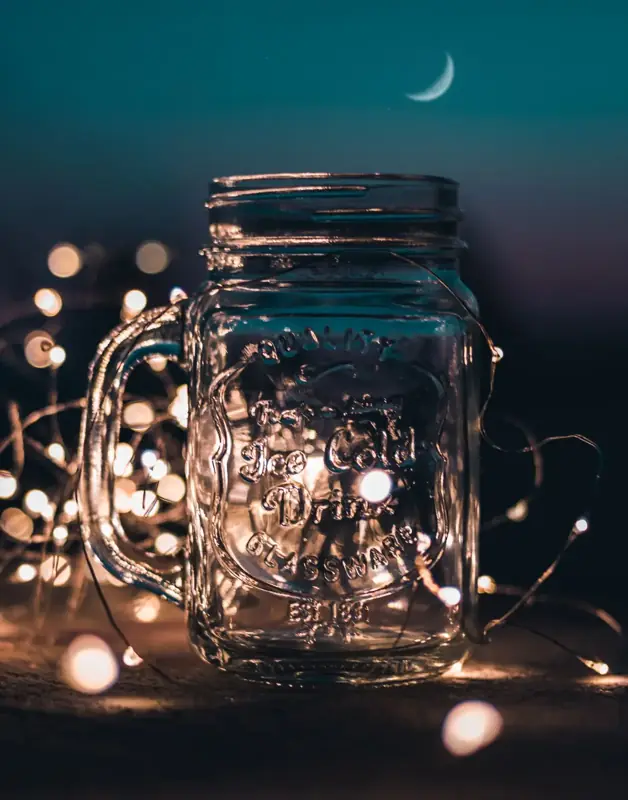
- Jars and bottles: the classic. Our mason jar fairy lights tutorial takes five minutes.
- Shelves and frames: weave a strand between books or around a mirror.
- Bedrooms: a cozy bedside glow with no cord to trip on.
- Tables: run strands through a greenery runner or coil them under glass domes.
- Wreaths and garlands: hide the box behind the wreath and you're done.
- Costumes and crafts: sew the wire along a hem or tuck it into a flower crown.
Battery operated fairy lights for weddings
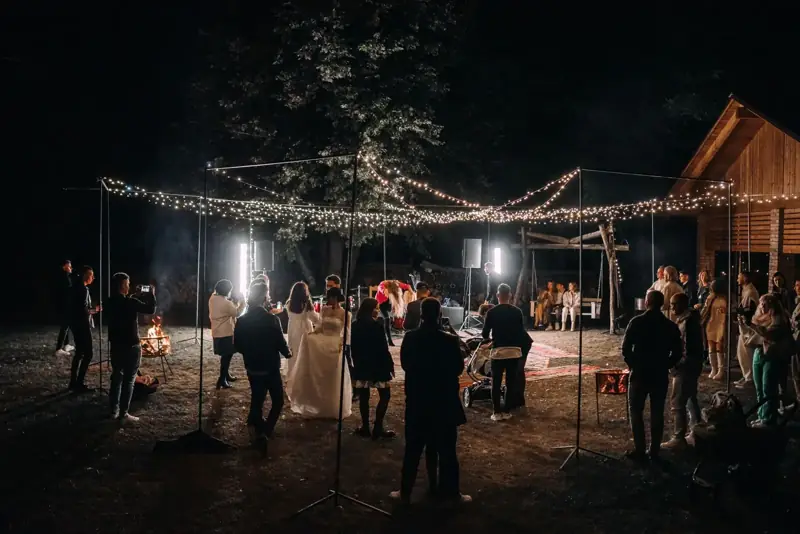
Battery operated fairy lights for wedding tables solve the biggest venue headache: no outlets in the middle of a lawn or barn. A jar or bottle with a coiled strand on every table, a few strands woven through the arch, and some draped along the head table add warmth without a single cord.
For events, plan battery life with a margin. Fit fresh cells the day of, use timers so lights come on before guests arrive and run past the last dance, and keep a small bag of spare batteries with the decor kit. Our wedding lighting ideas post has more layouts.
Setup, care and safety
Test before styling
Switch the strand on before you start arranging, so you're not unpicking a jar to find a dead section.
Uncoil gently
Micro wire kinks easily. Unwind from the box end in loose loops instead of pulling the strand straight.
Hide the box
Use a jar lid, a bit of washi tape on the back of a frame, or a small pouch tucked into greenery.
Store loosely
Wrap the strand around a card and remove the batteries before you put it away.
Don't mix old and new batteries, check boxes now and then for leaks, and keep strands away from candles and heaters. Most indoor battery strands aren't waterproof, so outdoor use needs a rated strand; see the outdoor fairy lights guide.
Keep going
Want something thinner and more delicate? The silver wire fairy lights guide covers micro wire in depth, and the light tools page has the battery calculator and more.