Outdoor fairy lights are the quickest way to make a yard feel like somewhere you want to stay after dark. A few strands of tiny warm LEDs through a hedge, along a fence or around a porch rail, and suddenly the space has edges, depth and a glow that a single floodlight never gives you.
This guide covers what to look for when you choose fairy lights for outside: battery vs solar vs plug-in power, waterproof ratings, timers, wire and color, then placement, setup and care.
If you only remember one thing: outdoors, the power source and the waterproofing matter more than the bulb count. Get those two right and almost any strand will look good.
What makes outdoor fairy lights different
Fairy lights are strands of very small LEDs, usually on thin copper, silver or PVC-coated wire, spaced a few inches apart. Indoor and outdoor versions can look identical in the box. The difference is in the parts you don't notice until it rains: a sealed battery box, sealed LED joints, a wire coating that won't crack in the cold and a rating that tells you how much water it can take.
Indoor strands left outside usually fail in one of three ways: water corrodes the battery contacts, moisture creeps into LED joints, or sunlight makes a thin coating brittle. Outdoor-rated strands are built to avoid all three.
Types of outdoor fairy lights
Battery operated fairy lights
Battery operated fairy lights are the most flexible option: no outlet, no extension cord, no trip hazard. Most run on two or three AA cells in a small box with a switch and, ideally, a timer. They're perfect for planters, tabletop lanterns, a balcony railing or the far end of the garden where no cord reaches. Battery powered fairy lights are also the usual pick for outdoor battery Christmas lights on wreaths, door frames and window boxes.
Solar fairy lights
Solar strands have a staked panel and a rechargeable cell, and switch on at dusk by themselves. They suit sunny beds and fences, and struggle in shade or in winter, when the panel never fully charges.
Plug-in and connectable outdoor fairy lights
Plug-in strands use a low-voltage adapter and can run every night without a thought about batteries. Many are connectable outdoor fairy lights, so you can join several strands end to end from one adapter, up to the limit printed on the packaging or adapter. For long fence runs or a big tree, this is the most practical route.
Battery operated hanging lights
Curtain and icicle strands hang vertical drops from a top line. Battery versions suit a pergola edge or doorway where you want a wall of light without wiring.
What to look for in fairy lights for outside
The table above sums up the recommendations. A few points deserve more explanation.
- Waterproof rating. Look for IP44 at minimum for a covered porch, and IP65 or higher for anything in open rain. IP65 means splash- and jet-resistant; IP67/68 means it can survive submersion. Our waterproof fairy lights guide goes deeper.
- Timer. Fairy lights with timer functions are worth it outside. The common pattern is 6 hours on, 18 hours off, repeating daily, so you switch on once at dusk and forget about it.
- Modes. Many strands offer 8 modes: steady, slow fade, twinkle, flash and so on. Outdoors, steady or slow fade usually looks the most natural.
- Color. White outdoor fairy lights come in warm white (around 2,700–3,000 K, golden like candlelight) and cool white (5,000 K and up, slightly blue). Warm white flatters plants, brick and wood; cool white suits frosty winter scenes.
- Wire. Bare copper or silver wire is thin, bendable and nearly disappears in leaves. PVC-coated wire is tougher on rough bark and metal railings.
- Lead wire. Check the unlit lead between the box and the first LED. A longer lead lets you hide the box somewhere sensible.
How long do the batteries last?
Battery life is the top question with battery operated fairy lights outdoors, and it depends on the LED count, the mode and the cells. A pair of AA alkalines typically holds roughly 2,000–2,500 mAh. A 100-LED strand might draw somewhere around 50–100 mA on steady, which works out to a few dozen hours in total. On a 6-hour timer, that is often one to two weeks of evenings. Twinkle modes stretch it; cold nights shorten it.
Rather than guess, plug your own numbers into the calculator below to estimate how many evenings you'll get.
Fairy light battery life calculator
Estimate how long a battery-operated string will glow. Move the sliders and watch the lights.
Estimate based on about 0.75 mA per micro LED at full brightness and 85% usable capacity. Cold weather and cheap cells shorten runtime.
For the full rundown of alkaline vs rechargeable vs lithium, read how long battery fairy lights last.
Where to use them
- Trees and shrubs: wrap the trunk in a loose spiral, then run out along a few main branches.
- Fences and railings: follow the top rail, or zigzag for a denser glow.
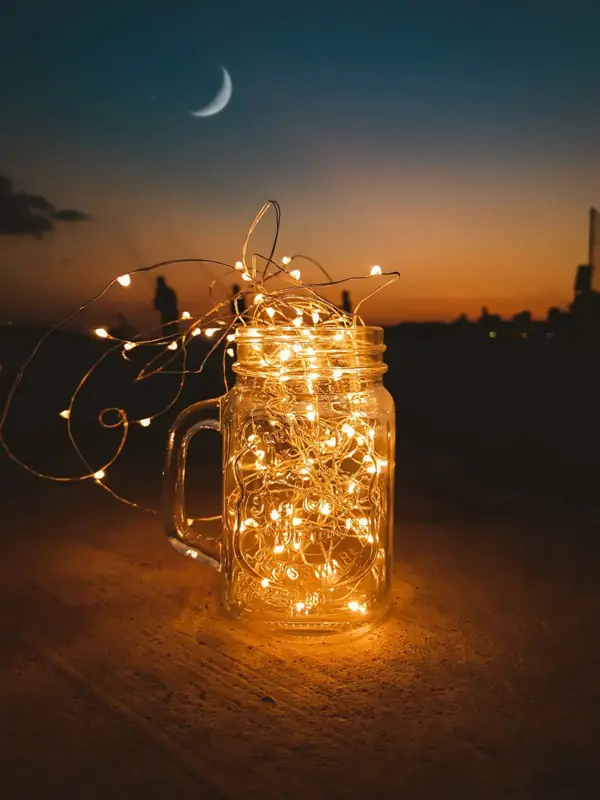
- Planters and lanterns: a coil of battery lights inside a lantern looks like a jar of fireflies.
- Pergolas and porches: drape curtain or hanging strands along the beam edge.
- Paths: tuck strands along the edge of a bed so they outline the path without being stepped on.
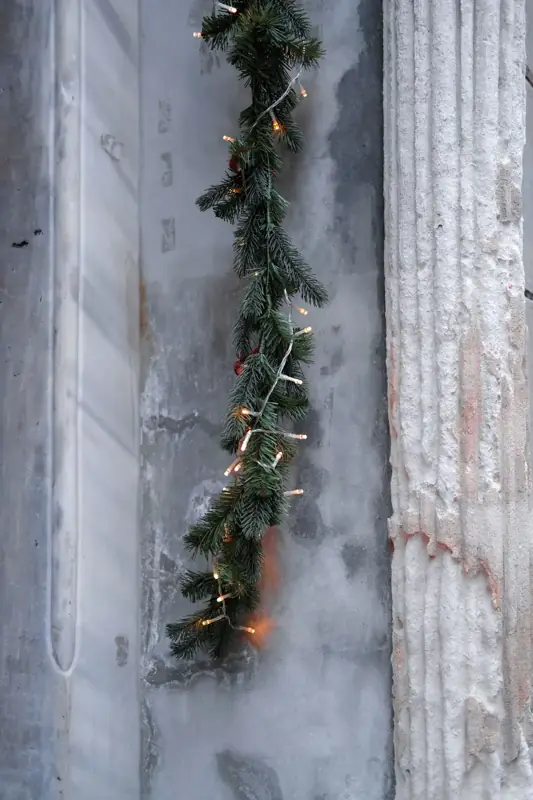
- Doors: a battery operated garland around the frame, box hidden at the back.
- Balconies: zigzag strands between railing points for a soft ceiling of light.
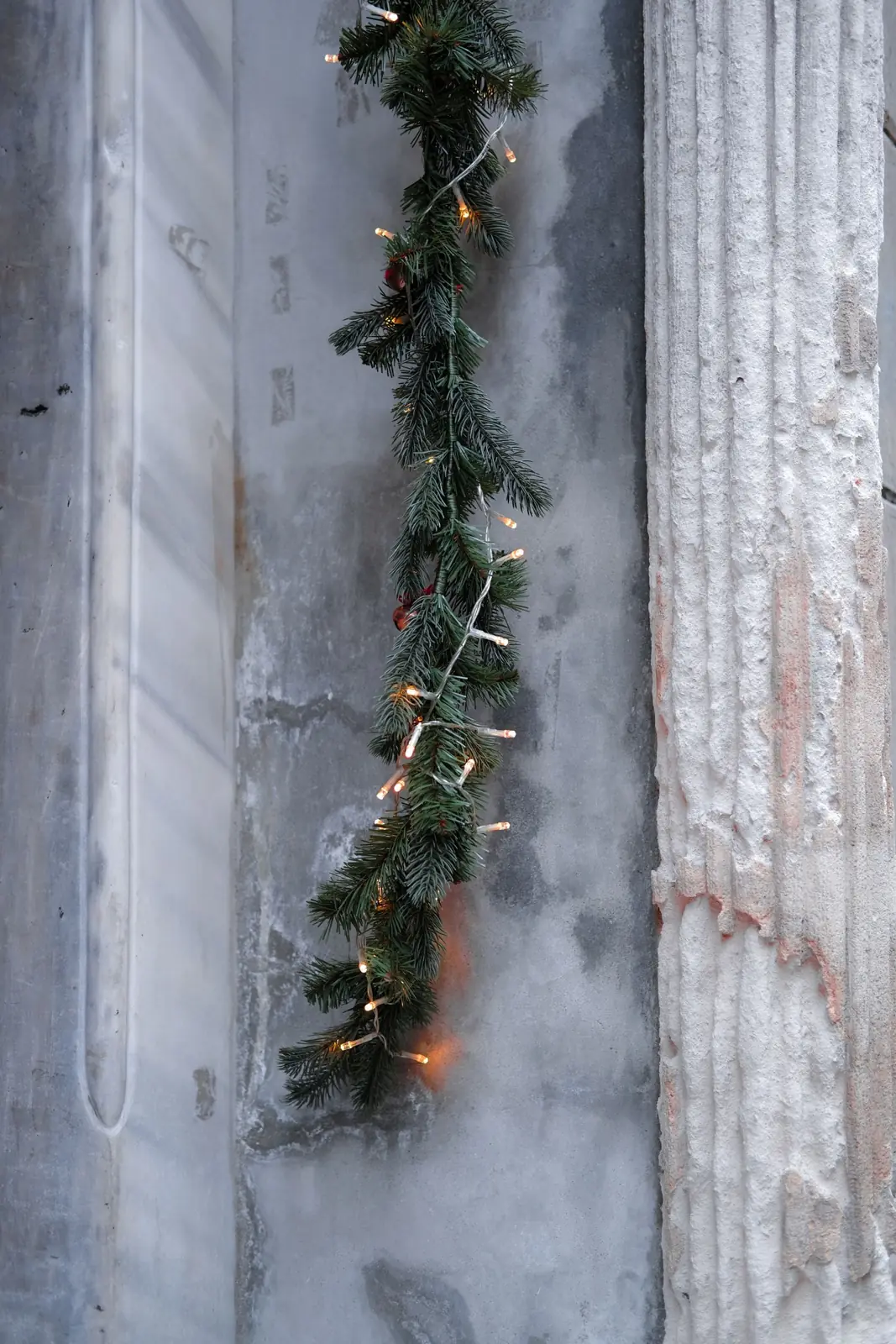
Big festoon setups over a seating area are a different job; our guide on how to hang outdoor string lights covers anchors, poles and guide wire.
Setup step by step
Test everything first
Fit fresh batteries or plug the strand in at a table and check every LED before it goes up a tree.
Decide where the box lives
Behind a planter, inside a hedge, under an eave. Point battery box openings and cable exits downward so water drains away instead of pooling at the seam.
Start at the power end
Anchor the box or plug end first, then work outward, so you never run out of strand before the end of the run.
Use soft fixings
Plastic clips, twist ties or gutter hooks. Never staple through the wire, and skip bare metal ties that can cut the coating.
Set the timer at dusk
Switch on at the moment you want the lights to come on each day; most timers repeat their cycle from that point.
Care and safety through the seasons
Check battery boxes after heavy rain; if you see condensation, open the box, dry it and wipe the contacts. Remove batteries from strands you won't use for a few weeks, because leaking cells are the most common way battery strands die. At the end of the season, wind each strand loosely around a piece of cardboard rather than balling it up, and store it somewhere dry.
Keep battery boxes out of reach of small kids and pets, and never mix old and new cells or different battery types in one box. Keep strands away from patio heaters and fire pits, and take them down from high branches before big storms.
Where to go next
If your lights are mostly for tables, jars and crafts, the battery operated fairy lights guide goes deeper on micro strands and star shapes. Planning a whole patio? Try the planner in our light tools.