Wedding motifs are the recurring shapes and symbols that tie a celebration together: the rings on the invitation, the florals on the cake, the knot pattern on the table runner. Chosen well, they turn a series of pretty details into a story about the two of you.
This guide covers the motifs that show up most often across wedding traditions, what they usually stand for, and, because this is a lighting site, how to make each one glow at the reception. Lighting is where a motif can really come alive once the sun goes down.
You don't need every motif. Pick one or two that mean something to you and repeat them in a few places: stationery, signage, tables and lights.
Why Wedding Motif Patterns Matter
A motif is a design shorthand. Repeating it gives guests a sense of cohesion, even if they never consciously notice it. It also makes decisions easier: once you know your motif is, say, olive branches, choosing napkins, signage and centerpieces gets much faster.
The best motifs have a personal link: a flower from the garden where you met, a constellation from the night you got engaged, a pattern from a family heirloom. Traditional symbols work beautifully too, especially when they echo cultural or family customs.
Classic Wedding Motifs and What They Mean
Rings and interlocking circles
The circle has no beginning or end, which is why it's so widely linked with lasting commitment. Two interlocking rings are one of the most recognizable wedding symbols there is.
Hearts
Simple, joyful and universal. Hearts work best used sparingly, as an accent on a cake topper or a single lit sign, rather than on everything.
Love knots and endless knots
Knot patterns appear in many traditions and usually represent two lives bound together. They translate well to embroidered linens, ribbon details and wrought-metal signage.
Florals and greenery
Flowers carry their own meanings in many cultures: roses for love, olive and laurel for peace and victory, ivy for fidelity and lasting attachment. A trailing ivy or greenery motif pairs naturally with fairy lights.
Birds
Pairs of doves or lovebirds often stand for loyalty and partnership. They're lovely as silhouettes on invitations and cake toppers.
Stars, moons and constellations
Celestial motifs suit evening and outdoor weddings perfectly, and they're the easiest of all to light. Some couples map the sky from their engagement date or wedding night.
Monograms and crests
Your combined initials, or a simple crest, are a tidy, personal motif that works on everything from napkins to the dance floor.
Wedding Lighting Ideas for Each Motif
Here's how to bring those motifs into your wedding lighting. Most of these use battery or plug-in fairy lights and string lights you can set up the day before.
| Motif | Lighting idea | What you need |
|---|---|---|
| Rings / circles | Hanging hoops wrapped in lights and greenery | Metal or wooden hoops, copper-wire fairy lights, faux eucalyptus |
| Hearts | A heart-shaped light frame behind the sweetheart table | Bent wire frame, warm white micro LEDs, zip ties |
| Knots | String lights swagged in crossing loops overhead | Festoon string lights, guide wire, poles or hooks |
| Florals / ivy | Fairy lights woven through garlands and arches | Battery operated garland, faux ivy, floral wire |
| Stars | A fairy light canopy or ceiling of drop lights | Curtain-style lights or many vertical strands |
| Monogram | Initials cut from board, outlined with lights | Foam board or plywood, micro LEDs, hot glue |
Fairy Light Wedding Decor, Table by Table
Centerpieces
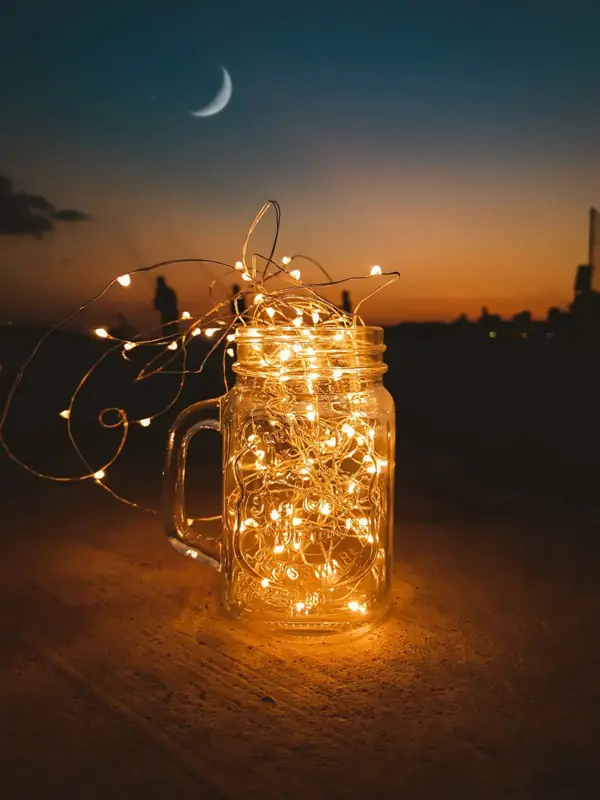
Fill clear vases or jars with a strand of battery fairy lights and a few stems that match your floral motif. Battery packs hide neatly under the base or in a wrap of ribbon. Strands with a 6-hour timer are a gift on the day: switch them on at sunset and forget about them.
Table runners
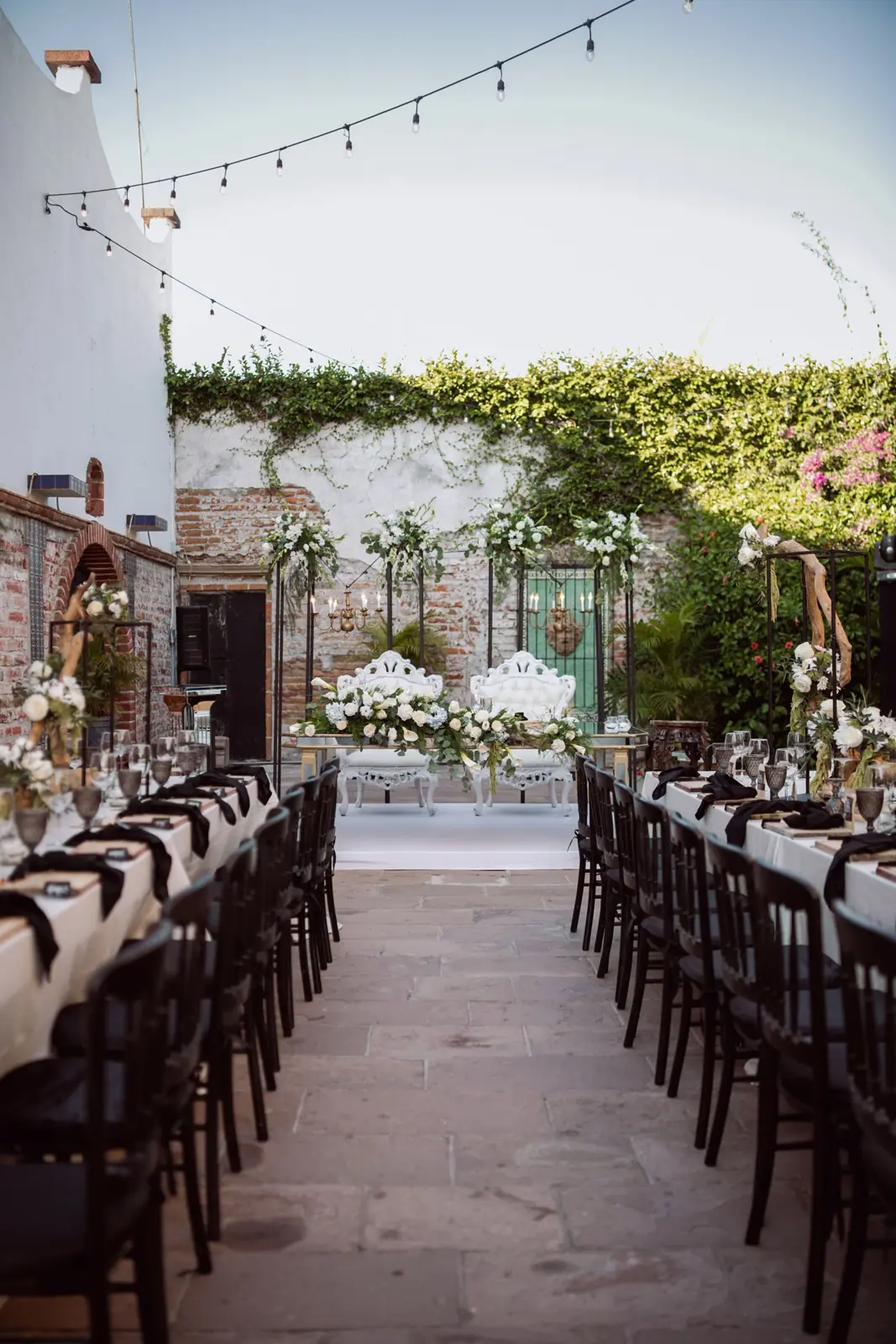
Run a strand of micro lights through a greenery garland down the center of long tables. Use warm white so food and faces look natural.
Head table and backdrop
A curtain of fairy lights behind the head table makes a perfect photo backdrop, and it's where a lit monogram or heart frame belongs.
Arch and aisle
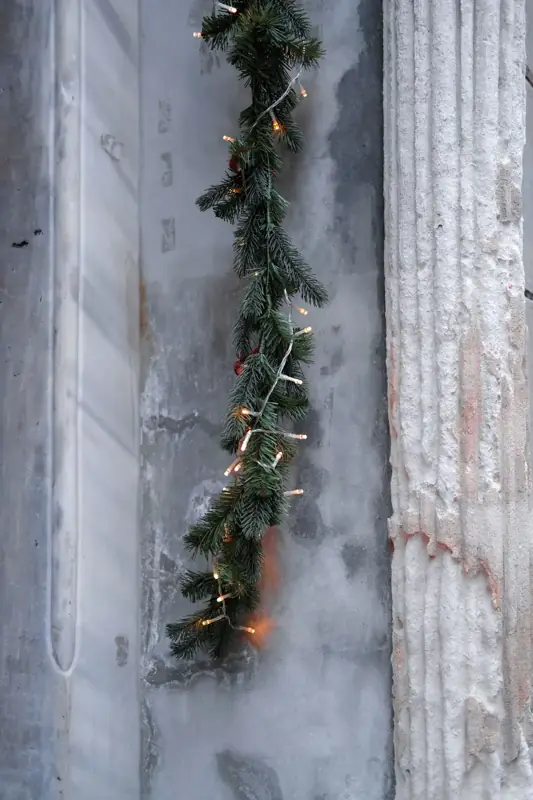
Wrap the ceremony arch in garland with built-in lights, and line the aisle with lanterns or jars. The battery operated garland guide covers pre-lit options that save hours of wrapping.
Planning Outdoor Wedding Lighting
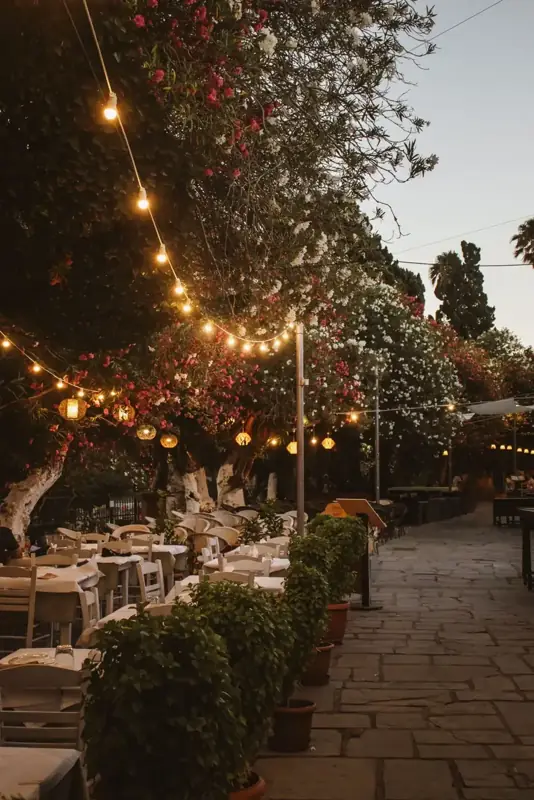
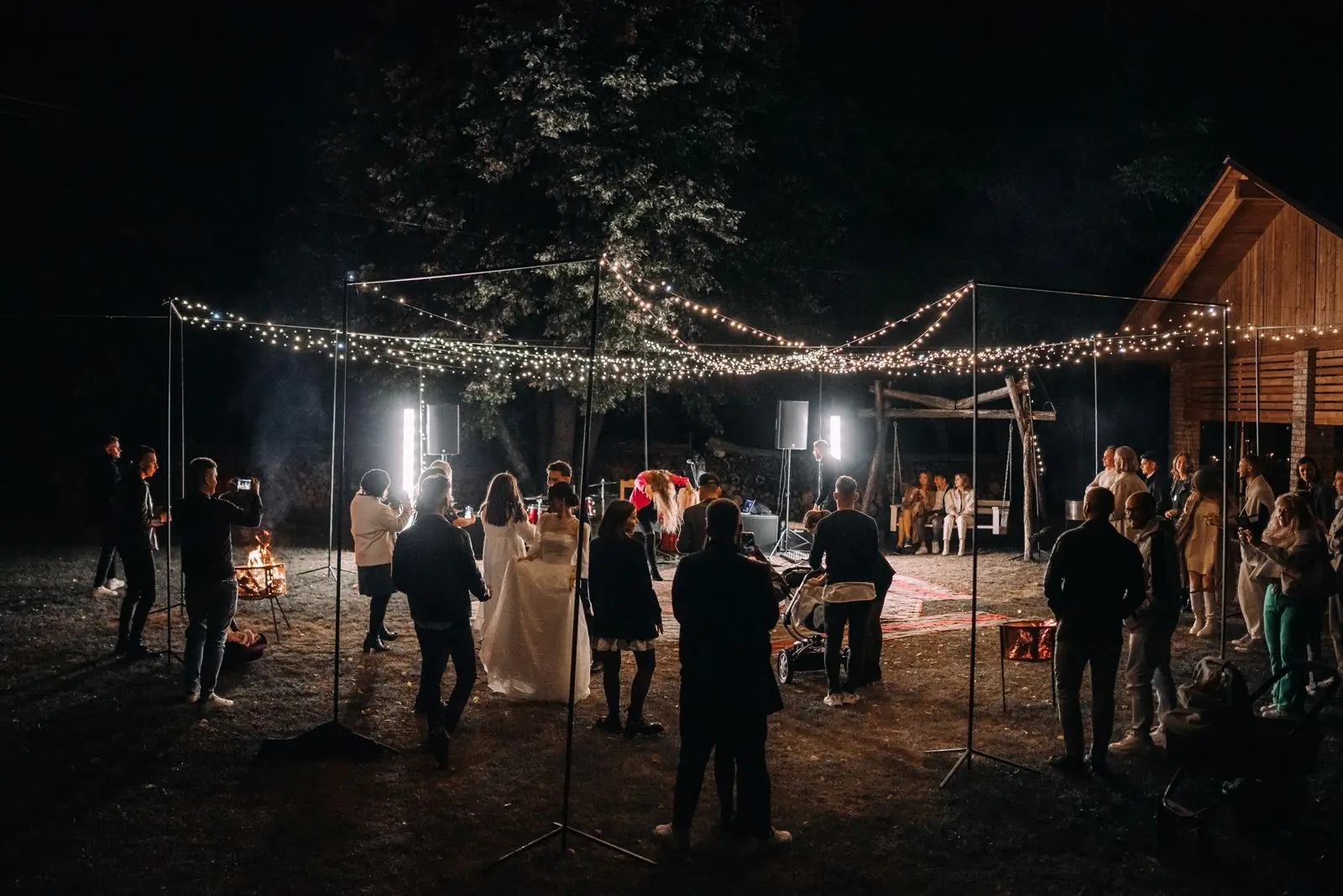
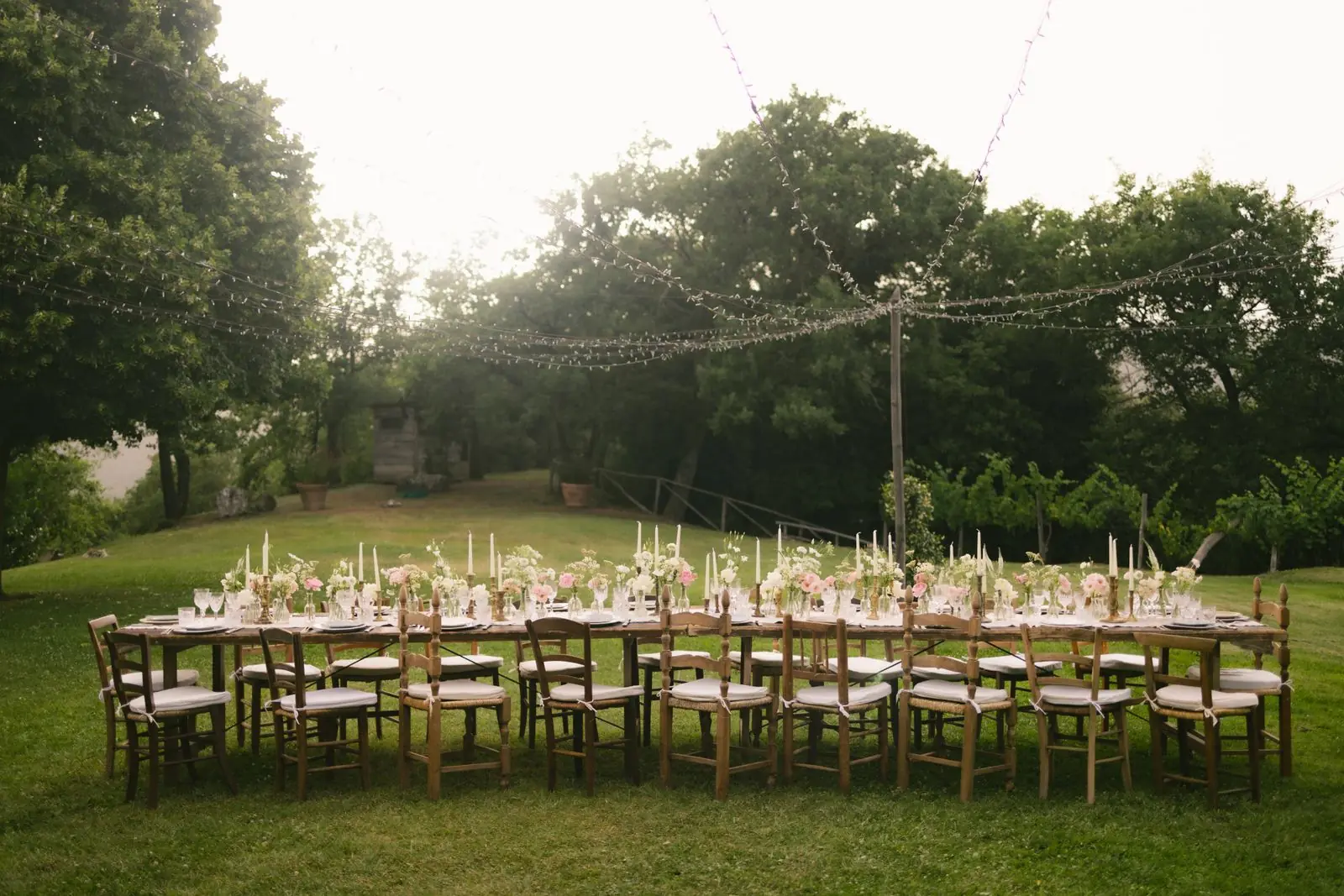
Outdoor venues need a bit more planning. Overhead string lights do most of the work, with fairy lights adding sparkle at table level.
- Weather rating: anything outside should be at least IP65 (splash-proof). Keep battery packs and plug connections sheltered.
- Overhead layout: plan zigzags, parallel runs or a central "maypole" pattern before you buy. Our waterproof fairy lights guide and the patio planner on the light tools page help estimate lengths.
- Power: confirm where outlets are and whether the venue allows extension cords across walkways.
- Spares: pack fresh batteries, spare fuses for plug-in strands and a roll of gaffer tape.
For a step-by-step on posts, guide wire and fixing points, see how to hang outdoor string lights.
Bringing Your Motif Together
Repeat your chosen motif in at least three places so it reads as intentional: once in print (invitations, signage), once in decor (centerpieces, linens), and once in light (a lit sign, a frame, a canopy). Keep the light color consistent throughout. Mixing warm white and cool white in one space looks accidental in photos.
Matching light color to your palette
Your light color should support the motif's palette rather than fight it. Warm white (around 2,700 K) suits gold, blush, ivory, terracotta and most greenery, which covers the majority of floral and ring motifs. Cool white can work with silver, navy and winter themes, and it makes a star or snowflake motif feel crisp. Colored lights are best kept to one accent, such as a soft blue glow under a celestial backdrop, so the motif still reads clearly. If you are torn between two tones, hang a short strand of each next to your linens and flowers in the evening and see which one makes the colors look truest. The difference is usually obvious within a minute.
Wrap-Up: Let the Light Tell the Story
The most memorable wedding motifs are the ones with meaning behind them, and lighting is the easiest way to make them shine after dark. Choose one or two symbols, carry them through print, decor and light, and keep everything in a single warm tone. For more event lighting ideas, read fairy lights for events and parties or browse the fairy lights collection.