Walk down any lighting aisle and you'll see "fairy lights," "string lights," "twinkle lights" and "micro lights" used almost interchangeably. So what is the real story with fairy lights vs string lights, and does it matter which you buy?
It does. Technically, fairy lights are a type of string light, but in everyday use the two names describe products that look, behave and fit spaces very differently. This guide explains the differences, walks through the main styles, and helps you choose for your room, patio or event.
The quick answer
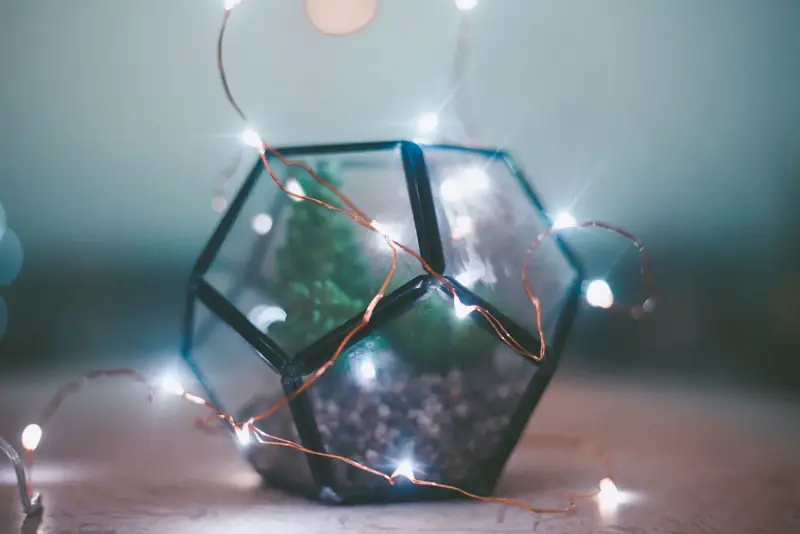
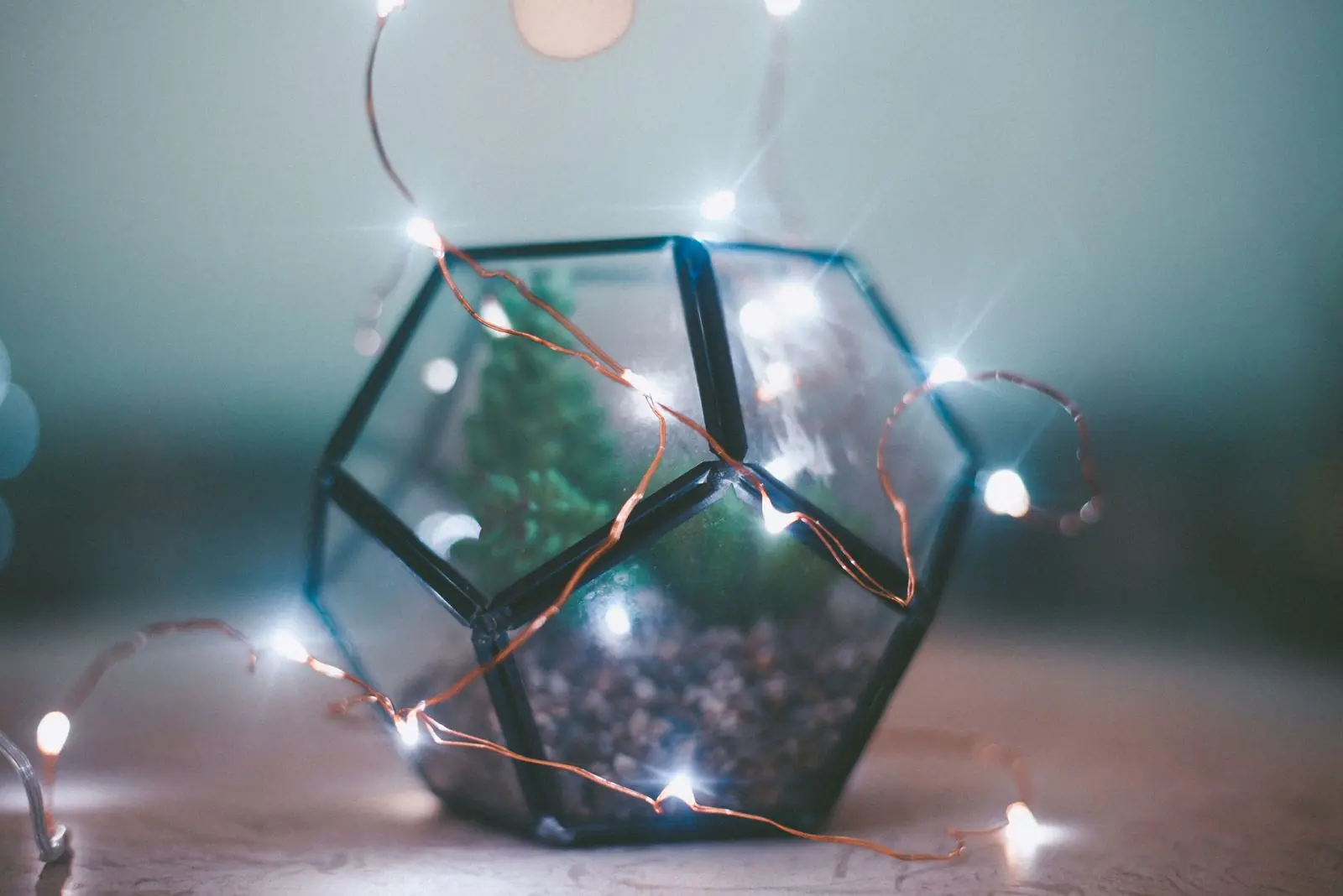
Fairy lights are tiny LEDs on thin, flexible wire, often copper or silver, meant to twinkle softly and wrap around almost anything. They are usually battery or USB powered.
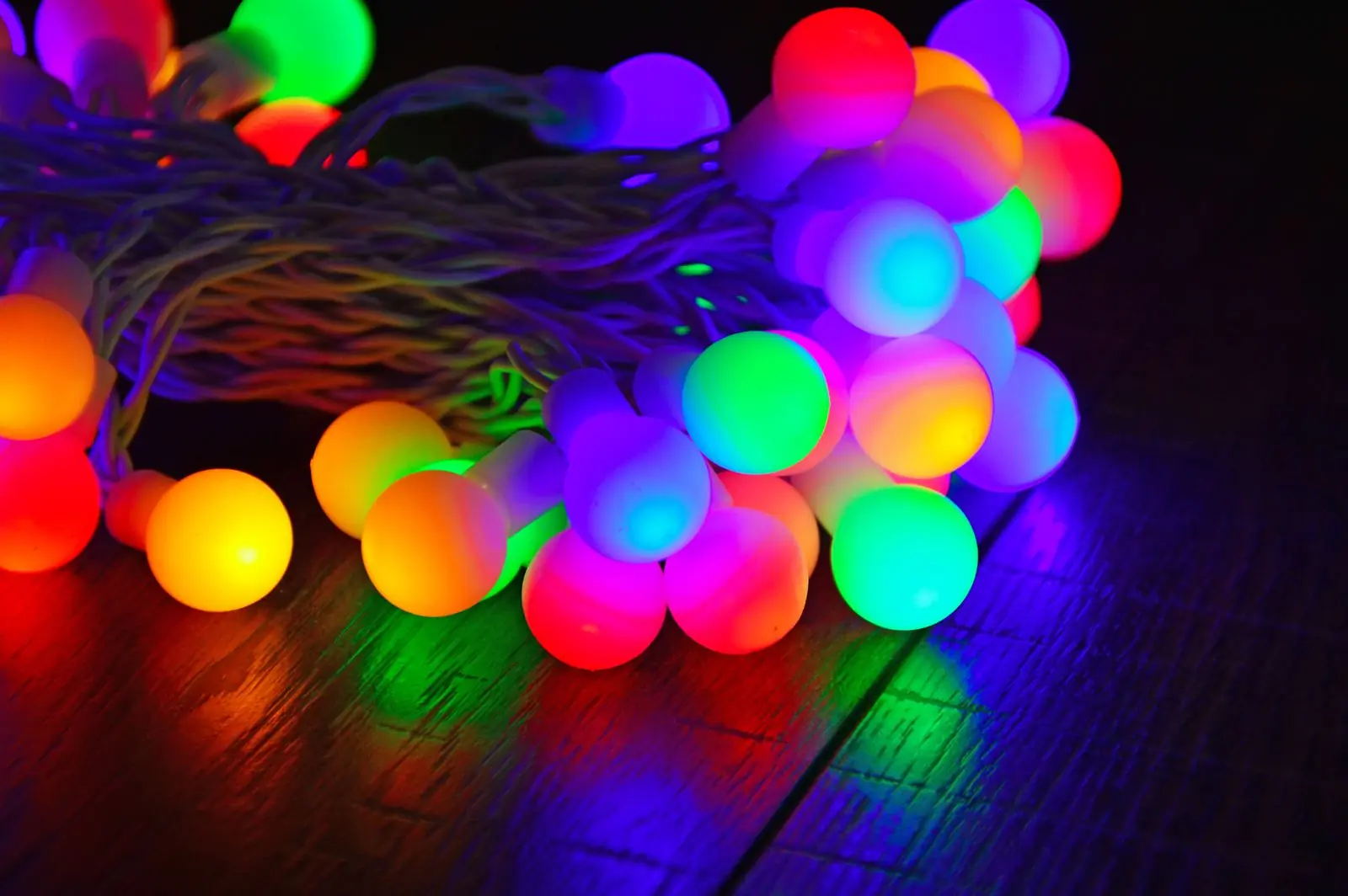
String lights in everyday speech usually means larger, visible bulbs on a thicker cord: globe lights, festoon or cafe lights, Edison-style bulbs. They are mostly plug-in and are made to light up a space, not just decorate it.
Fairy lights vs string lights: side by side
| Feature | Fairy lights | String lights |
|---|---|---|
| Bulb size | Rice-grain micro LEDs, a few millimeters | Visible bulbs, often 1–2 inches or larger |
| Wire | Thin copper, silver or clear PVC wire; bendable | Thick insulated cord, often with sockets |
| Spacing | Close, commonly about 2–4 inches | Wider, commonly about 6–24 inches |
| Brightness | Soft sparkle, decorative | Enough to see by, can replace a lamp outdoors |
| Power | Battery pack, USB or small adapter | Mostly mains plug-in; some solar |
| Typical length | 3–33 feet | 15–50 feet per strand, often connectable |
| Best for | Jars, wreaths, headboards, centerpieces, crafts | Patios, pergolas, parties, weddings, cafes |
The main types of fairy lights
Copper and silver wire micro LEDs
The classic. Bare metal wire with micro LEDs soldered along it. You can shape the wire into hearts, wrap it around a branch or stuff it into a bottle. Copper reads warm and vintage; silver nearly disappears against white walls. See our silver wire fairy lights guide for sizing and power options.
PVC or clear cable fairy lights
Slightly thicker, softer cable that is gentler on fabrics and often more weather resistant. Good for outdoor shrubs and railings.
Novelty fairy lights
Stars, flowers, fireflies and tiny pearls. Firefly strings, with LEDs on fine branching wire, imitate fireflies in a jar.
Curtain and icicle fairy lights
Many short strands hanging from a top wire. Perfect behind sheer curtains, photo backdrops and dessert tables.
The main types of string lights
Festoon and cafe lights
Bulbs that hang from sockets on a heavy cord, the look you see over restaurant patios. Often S14 Edison-style or teardrop bulbs, with LED versions using far less power than the old filament kind.
Globe lights
Round ball bulbs, commonly sized G40 (about 1.5 inches) or G50 (about 2 inches). They come clear, frosted or in mixed colors, and give a fun, garden-party feel.
Classic holiday bulbs
Mini lights and C7 or C9 strawberry-shaped bulbs. These are the familiar Christmas strings for trees and rooflines.
Rope and tube lights
LEDs sealed inside a flexible plastic tube. Durable for outlining paths and steps, though LED strips have replaced them in many indoor projects.

Which to choose for your space
Bedrooms and living rooms
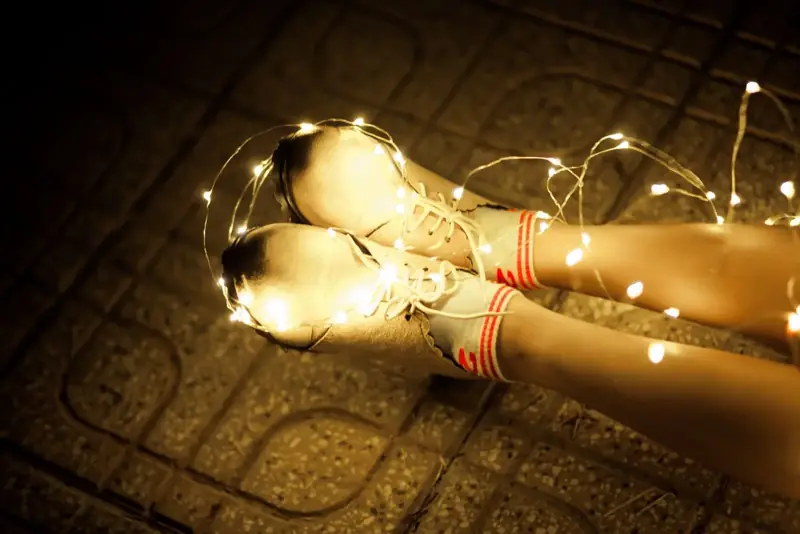
Fairy lights win for most indoor decor. They are soft enough to leave on through the evening and small enough to wrap around mirrors, shelves and headboards. Plug-in or USB strings are easier for nightly use; our indoor fairy lights guide compares the options. A string of globe lights can work too, especially in a dorm or a room with high ceilings, as long as the bulbs are LED and stay cool.
Patios, pergolas and gardens
String lights are usually the right call when you want to light a seating or dining area. A run of festoon or globe bulbs makes a space usable after dark. Fairy lights still shine as accents: wrapped around tree trunks, planters and railings. Our step-by-step on how to hang outdoor string lights covers guide wires and poles.
Weddings and events
Use both. String lights overhead for light and atmosphere, fairy lights in jars, centerpieces and backdrops for sparkle at eye level. Our party and event lighting ideas show combinations that work.
Crafts and small displays
Fairy lights, no contest. Micro LEDs fit inside jars, bottles, shadow boxes and wreaths where a full-size bulb never could.
Power, safety and practical differences
- Heat: LED fairy lights stay barely warm. Older incandescent string lights can get hot, so keep them clear of fabric and paper.
- Battery life: Small fairy light strings run days on AAs; larger string lights almost always need an outlet or solar panel.
- Weather: Check the rating either way. IP44 handles splashes; IP65 or higher is better for exposed outdoor use.
- Connectability: Plug-in string lights often link end to end. Battery fairy lights generally don't.
- Durability: Thin fairy wire can kink or snap if bent sharply, while festoon cords are tougher but heavier to hang.
Common mistakes when choosing
- Buying by bulb count alone. A 100-light fairy string and a 25-bulb festoon string cover very different areas. Check the total length and the lead wire, the unlit stretch between the plug or battery box and the first light.
- Ignoring the lead wire. A short lead can leave your first bulb several feet from where you need it. Measure from the outlet to the start of your display.
- Mixing color temperatures. Warm white fairy lights next to cool white globe lights look mismatched. Read the packaging carefully, as "white" can mean either.
- Using indoor lights outside. Indoor fairy lights and USB adapters aren't sealed against rain. Moisture in a battery box causes corrosion and dead strings.
- Underestimating fixings. Heavy festoon strings need hooks, guide wire or poles. Fairy lights only need tiny clips, tape or adhesive hooks.
Lifespan and care
LED versions of both types typically last for many thousands of hours, so the bulbs themselves rarely fail first. What wears out is the wiring, the battery contacts and the weather seals. Fairy wire is the most delicate: coil it loosely around a piece of card when you take it down, rather than wrapping it tightly around your hand. Festoon strings with replaceable bulbs are the easiest to repair, since one broken bulb can simply be swapped out. Store both kinds somewhere dry, remove batteries first, and check for cracked insulation before you hang them again.
Wrap-up
When comparing fairy lights vs string lights, think scale: fairy lights for close-up sparkle and crafts, string lights for lighting up spaces. Many of the best setups use both. Explore firefly string lights for something in between, or plan your strand lengths with the tools on the light tools page.