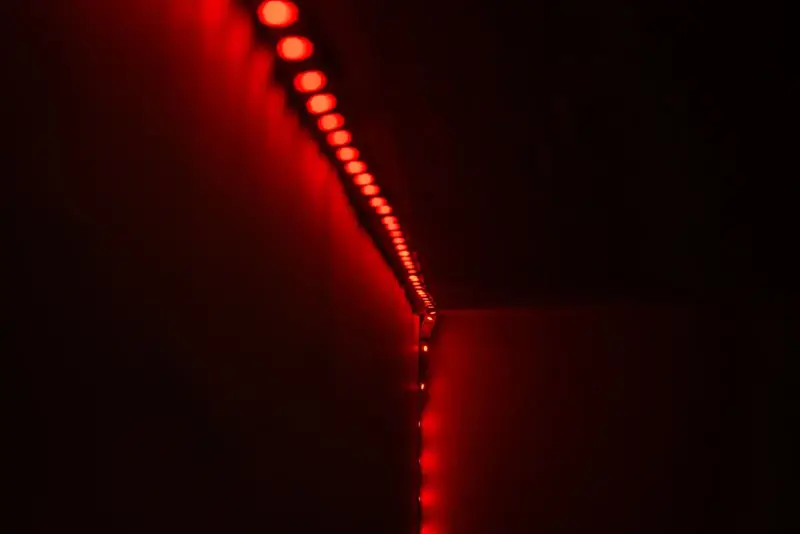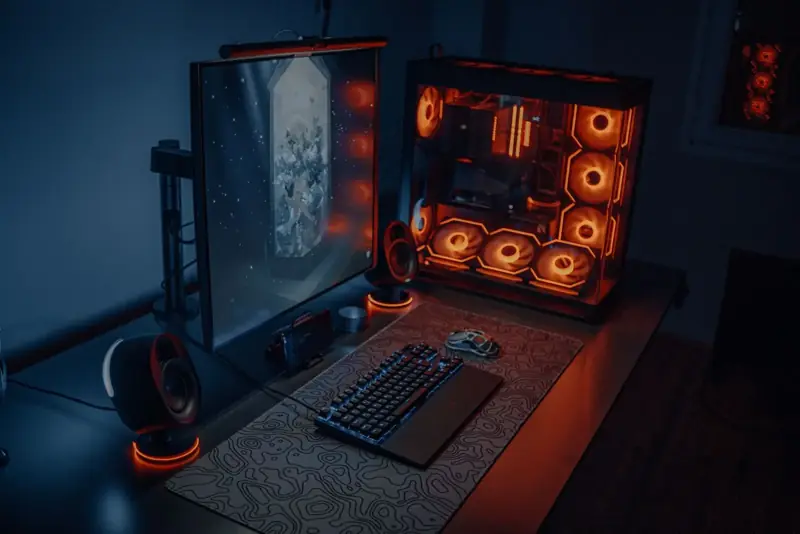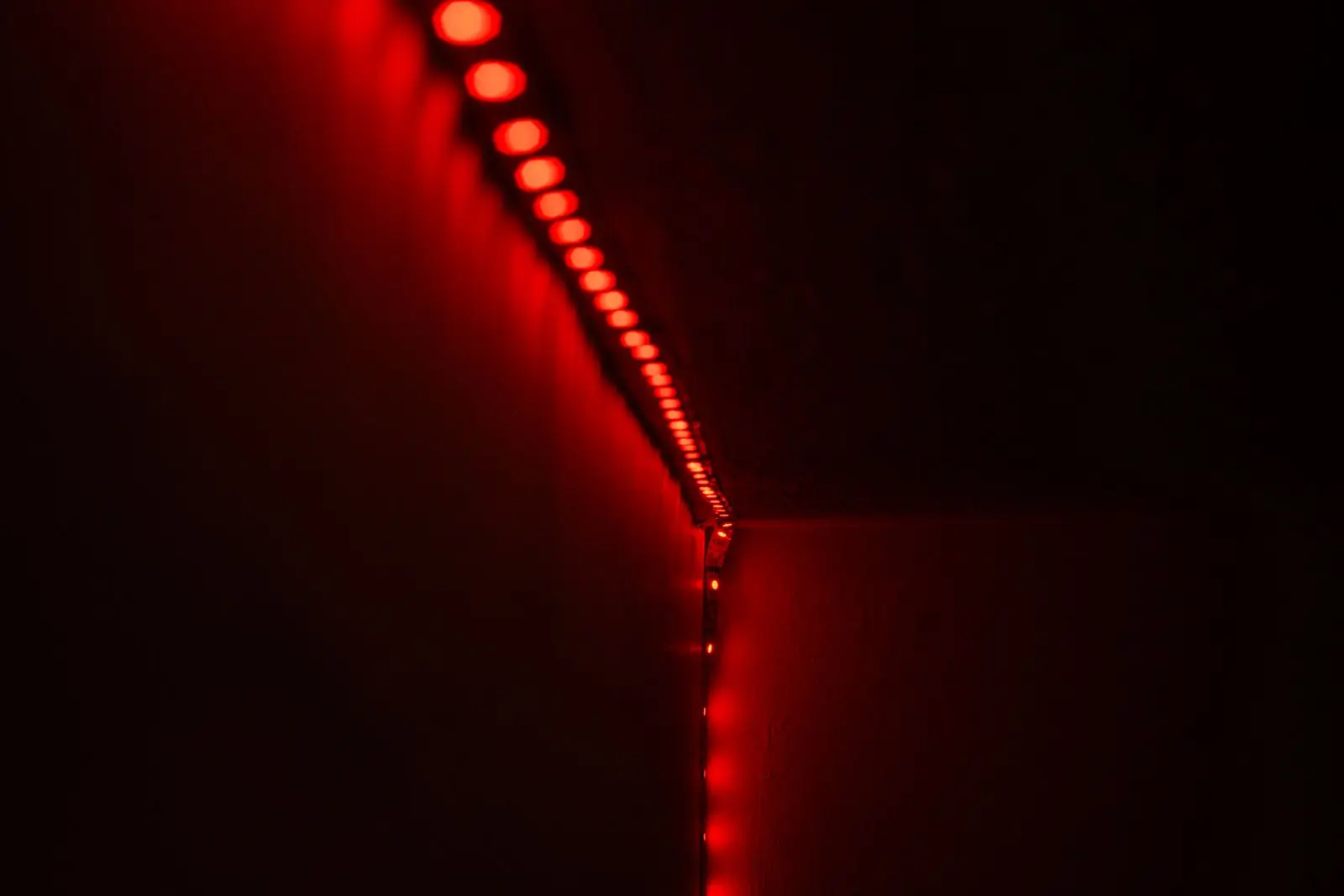
Fitting LED lights under couch frames is one of the quickest ways to change how a living room feels at night. A thin strip tucked under the frame throws a soft pool of light onto the floor, and the sofa suddenly looks like it's floating. It's also genuinely useful: it's enough light to find the remote or walk to the kitchen without switching on the big overhead.
The project takes about an hour and doesn't need any wiring skills. The tricky parts are choosing a strip that won't look spotty, measuring correctly, and getting it to stay stuck to the underside of fabric and wood.
Here's the full process, from picking a strip to adding a motion sensor so the light comes on by itself.
Why Put LED Lights Under a Couch?
A sofa with lights under it does three jobs at once:
- Ambient glow. Indirect light bounced off the floor is soft and flattering, and it makes a room feel bigger.
- Night path light. A low glow is enough to navigate by without wrecking your eyes' dark adaptation.
- Movie-night mood. Dim, warm light behind and under seating reduces the harsh contrast of a bright screen in a dark room.
It works best on sofas with legs and at least 2–3 in of clearance. If your couch sits flat on the floor, you can still run the strip along the back edge facing the wall for a similar halo effect.
Choosing the Right Strip
Voltage and length
LED strips are commonly sold in 5 V, 12 V and 24 V versions. For a single sofa, a 5 V USB strip can work if the run is short, around 6 ft or less. For a full three-seater or a sectional, a 12 V or 24 V strip with its own adapter gives more even brightness, because lower-voltage strips tend to dim toward the far end on long runs.
LED density and COB strips
Because the strip sits close to the floor, you'll see the reflection of each LED as a dot on a shiny surface. Higher density (60 LEDs per meter or more) helps, and COB strips, which have a continuous line of light with no visible dots, look best on polished wood or tile.
Color: white, RGB or tunable
Warm white (2,700–3,000 K) is the most relaxing and matches most lamps. RGB strips let you change colors for parties or gaming, and RGBW or tunable-white strips give you both. If you're not sure which color temperature suits your room, the color and mood picker on our light tools page is a quick way to compare.
For a deeper comparison of strip types, read the best strip lights for DIY projects.
Measure and Plan the Run
Flip the sofa forward or tilt it onto its back (two people, please) and look at the frame. You're looking for a flat, solid surface 1–2 in in from the outer edge. Mounting too close to the edge makes the strip visible; too far in and the glow won't reach past the sofa.
Measure each side you want lit
Most people light the front and two sides. Add the back too if the sofa floats in the middle of the room.
Plan corners
Note where the strip needs to turn. You can bend most strips gently on the flat side, or cut and use corner connectors.
Find the power point
Decide which back leg the cable will run down, and how far it is to the nearest outlet.
Add 10% slack
Round up to the next cut mark. It's easier to trim than to splice on more.
Plug your numbers into the calculator below to check total length and the power supply size you'll need.
LED strip length and power supply calculator
Size the power supply, find the cut interval and see whether a long run needs power injection.
Each block in the preview is one powered section. Always check the watts-per-meter on your strip's label; it varies by brand.
Installing the Strip
- LED strip and matching adapter or controller
- Isopropyl alcohol and a lint-free cloth
- Adhesive mounting clips or small screw-in cable clips
- Aluminum channel (optional, but great on fabric-covered frames)
- Cable clips or a cord cover for the power lead
Clean the surface
Wipe the frame with isopropyl alcohol and let it dry. Dust is the number one reason strips fall off.
Test before you stick
Connect the strip and switch it on before peeling any backing. It's far easier to fix a bad connection now.
Mount with backup
The built-in tape is rarely enough under furniture. Add a clip every 12–16 in, or mount the strip in an aluminum channel screwed to the frame.
Secure the cable
Run the lead down the inside of a back leg and clip it in place, so feet and vacuum cleaners can't snag it.
Smart Strip Lights and Motion Sensors
Motion-sensor strips
A motion-sensor kit turns the under-couch strip into an automatic night light. Mount the small sensor at the front of the sofa, low and facing the walkway, and set a short timeout of 30–60 seconds. Many kits include a light sensor so they only trigger when the room is dark.
Smart strip lights
Smart strip lights on the sofa let you schedule the glow, dim it from your phone, or tie it into routines. A "movie" scene could dim the ceiling light and fade the sofa strip to a low warm amber. Most Wi-Fi strips need a 2.4 GHz network, and many work with Alexa or Google Home. The smart LED strip lights guide covers app control, and a Wi-Fi LED controller can make an existing strip smart.
If you want to set up voice control, follow how to connect Alexa to LED lights.
Styling Tips That Make It Look Built-In
- Keep it subtle. Run the strip at 30–50% brightness. You want a glow, not a runway.
- Match the room. Warm white with wood floors; cooler white or soft blue with gray and modern pieces.
- Light other low pieces too. A matching strip under a TV unit or bed frame ties the room together.
- Hide every dot. If you can see individual LEDs reflected on the floor, move the strip further back or switch to a diffuser channel.
Wrap-Up: Your Floating Sofa in an Hour
LED lights under a couch are cheap, reversible and surprisingly practical. Measure carefully, back up the adhesive, keep the adapter in the open, and add a motion sensor if you want it to work as a night light. If the glow sends you down a strip light rabbit hole, our guide on how to cut LED strip lights will help with corners and longer runs.